Regional centrifuge service coverage means shorter response times, lower emergency costs, and less production loss when equipment goes down. The closer your service provider's technicians are stationed to your plant, the faster you're back running — often the difference between a same-day fix and a multi-day shutdown.
It's 2 a.m., your centrifuge just threw a bearing, and you're on the phone with a service provider that operates out of a state you've never set foot in. You ask when someone can be on-site. The answer determines whether you're back in production by morning or explaining a multi-day shutdown to your VP of Operations. That's the real question behind every "centrifuge service near me" search — not who services your brand of equipment, but who can actually reach your dock door before the damage compounds. Regional centrifuge service coverage isn't a nice-to-have; it's the variable that decides your downtime bill.
Why centrifuge service response time comes down to geography
You could search "industrial centrifuge repair near me" and get a dozen results with no real way to tell who's actually close. But the distance matters more than the search results suggest.
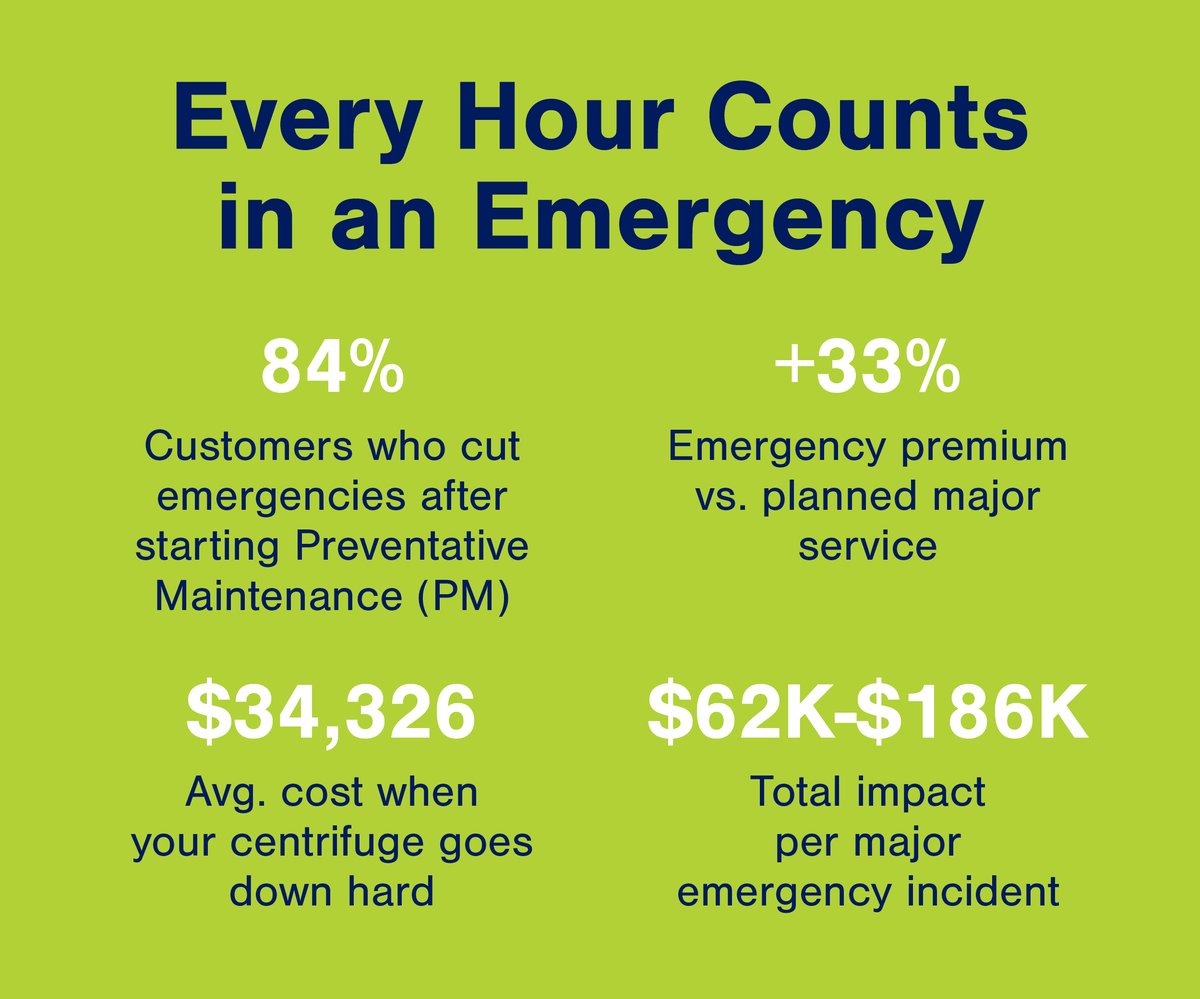
Across more than 4,700 service work orders, Separators found that an emergency major service runs 33% more than the same job done on a planned schedule — $34,326 versus $25,738 — and that's before you count what a stalled line actually costs.
A single six-hour unplanned outage can put roughly 30,000 gallons of product at risk: about 9,000 gallons dumped, 21,000 rerouted at added transport cost, plus the overtime and compliance paperwork that follow. Total impact on a major emergency incident lands between $62,000 and $186,000.
None of that improves because your provider has good technicians. It improves because they have technicians close enough to get there before the six-hour mark turns into a twelve-hour one.
Check out our recent industry report for a deep dive into the math behind fewer emergencies.
How Separators built regional centrifuge service coverage without a chain of branch offices
Separators doesn't run a network of storefronts. What it runs is a bench of factory-trained field service technicians stationed across the country, positioned near the dairy corridors and industrial hubs where centrifuges actually live — from Indianapolis, where the shop and parts operation sit minutes from the airport, out to processing hubs like Minnesota.
That airport proximity matters more than it sounds: When a technician needs to fly instead of drive, being close to a major hub shaves hours off deployment. And because Separators services Alfa Laval, Tetra Pak, and Westfalia equipment under one roof, regional coverage doesn't mean waiting on the one local centrifuge repair service that happens to know your specific brand — it means whoever's closest can actually work on what you've got.
Add a Regional Sales Manager who already knows your plant, your equipment history, and your usual points of failure, and you can put that relationship to the test any time by scheduling a service call.
What 24/7 centrifuge service locations actually get you at 2 a.m.
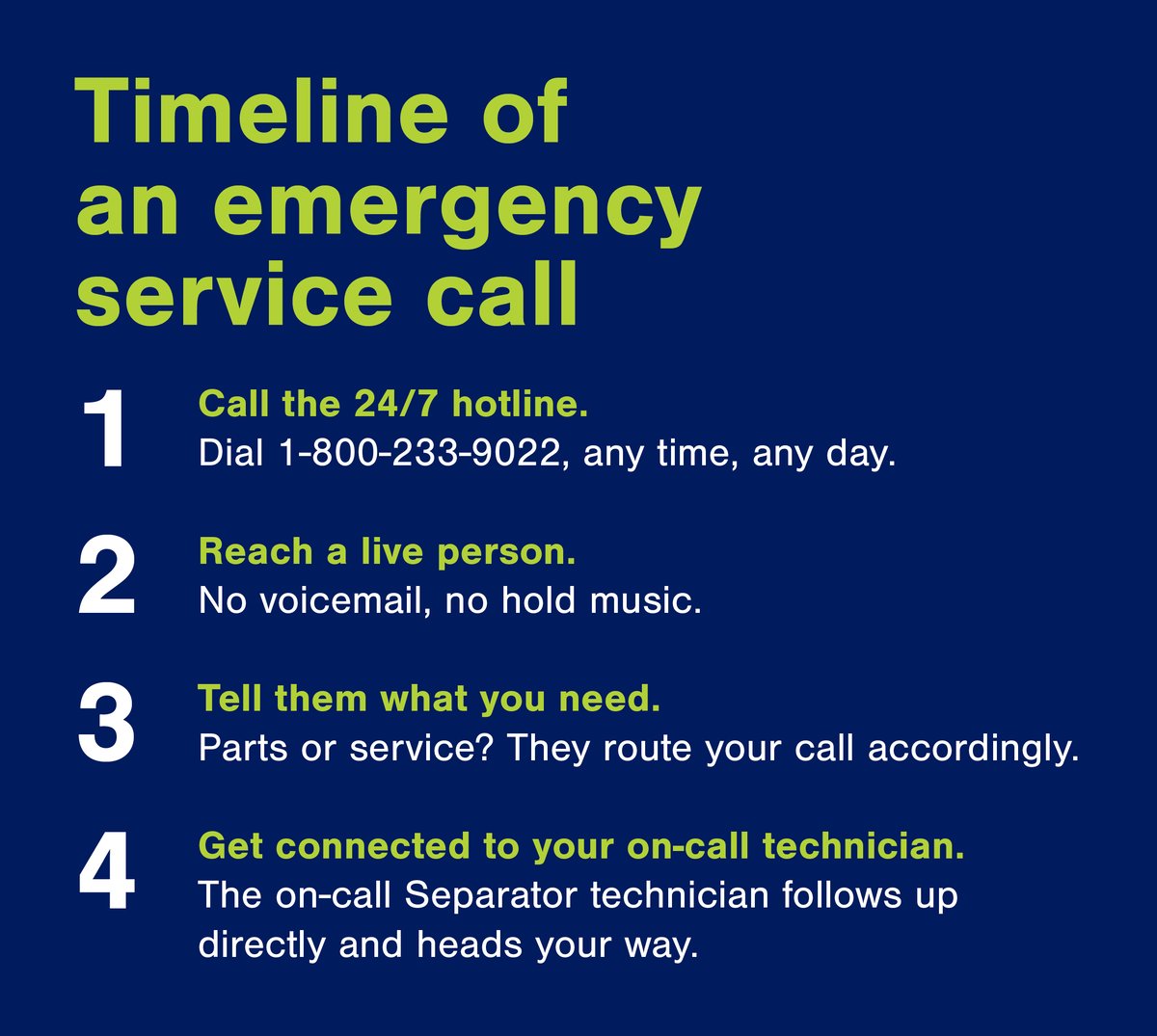
Here's what actually happens when you call: You reach a live person immediately — an after-hours answering service that asks whether you need parts or service, then loops in the on-call Separators technician, who follows up directly.
Whether your plant sits in Indiana, Minnesota, or anywhere in between, the process doesn't change: one number, a live person, and a technician who's already headed your way while you're still walking the floor assessing the damage.
Local coverage also means your planned service doesn't fall through the cracks.
Emergency response gets the attention, but the same regional network is what keeps your minor service (every six months) and major service (annually) on schedule instead of getting bumped by whoever's provider is closer that week.
It shows in the data: 84% of customers who moved to a regular preventive maintenance schedule saw their emergency calls drop afterward. A provider that's actually positioned near your plant can work you into the rotation instead of squeezing you in around a cross-country flight — which is a big part of why fewer of their PM customers end up needing the 2 a.m. call in the first place.
Know who's coming before you need them
Distance is what turns a routine repair into a $186,000 incident, and it's the one variable most plants never evaluate when they pick a service provider. Separators built its field service network around proximity on purpose — technicians positioned near major dairy and industrial hubs, one 24/7 hotline regardless of what state you're in, and a service model that treats regional coverage as infrastructure, not a marketing line. Get on the schedule before you need the emergency line.

And save Separators' 24/7 emergency hotline in your phone right now, just in case: 1-800-233-9022.


